Mirrors gather the light
Reflector Telescopes
Newtonians and Dobsonians put the most aperture in your hands for the money. More aperture means fainter galaxies, crisper globular clusters and a brighter view of everything.
Aperture is king
A 130 mm mirror shows Saturn's rings and the brighter galaxies. 200 mm and up starts to reveal spiral arms on dark nights.
Dobsonian or equatorial?
A Dobsonian base is point-and-push, rock steady and quick to set up. An equatorial mount tracks the sky but takes a little learning.
Plan for collimation
Reflectors need their mirrors lined up now and then. It takes five minutes once you've done it twice, and a cheap collimation cap is all you need.
-

Celestron
Celestron 21049 PowerSeeker 127EQ Reflector Telescope, Black
- 127 mm aperture
See today's price on Amazon
-

Celestron
Celestron 31045 AstroMaster 130EQ Newtonian Reflector Telescope, Dark Blue
- 130 mm aperture
See today's price on Amazon
-

Celestron
Celestron 31145 NexStar 130SLT Portable Computerised Newtonian Reflector Telescope with Quick-release Fork-arm Mount, Accessory Tray and…
- 130 mm aperture
- GoTo
See today's price on Amazon
-

Celestron
Celestron AstroMaster 130EQ-MD Telescope with Motorised Tracking
- 130 mm aperture
See today's price on Amazon
-

Celestron
Celestron StarSense Explorer LT 114AZ Newtonian Smartphone Guided Telescope
- 114 mm aperture
- Smart
See today's price on Amazon
-

Celestron
Celestron 31042 AstroMaster 114EQ Newtonian Reflector Telescope, Dark Blue
- 114 mm aperture
See today's price on Amazon
-

Celestron
Celestron 114LCM Computerised Reflector Telescope for Beginners
- 114 mm aperture
See today's price on Amazon
-

Celestron
Celestron StarSense Explorer 130AZ Tabletop Telescope with Smartphone App
- 130 mm aperture
- Smart
See today's price on Amazon
-
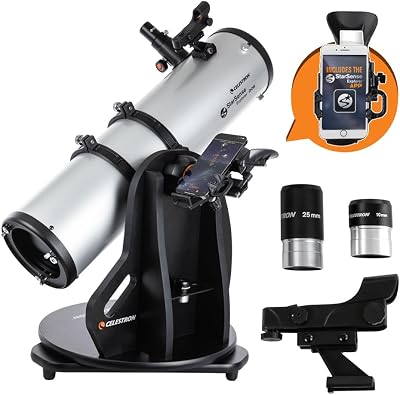
Celestron
Celestron StarSense Explorer 150AZ App-Enabled Tabletop Dobsonian Telescope
- 150 mm aperture
- Dobsonian
See today's price on Amazon
-

Celestron
Celestron StarSense Explorer 114AZ App-Enabled Tabletop Dobsonian Telescope
- 114 mm aperture
- Dobsonian
See today's price on Amazon
-

Celestron
Celestron 31036 AstroMaster LT 76AZ Newtonian Reflector Telescope, Dark Blue
- 76 mm aperture
See today's price on Amazon
-

National Geographic
National Geographic Newtonian Telescope 114/ 900 AZ with tripod
- Alt-az
See today's price on Amazon
-

Sky-Watcher
Skywatcher Explorer-130M 130mm (5.1") f/900 Motorised Newtonian Reflector Telescope 10713
- 130 mm aperture
See today's price on Amazon
-

Sky-Watcher
Skywatcher Heritage130P FlexTube Dobsonian Telescope Black
- Dobsonian
See today's price on Amazon
-

National Geographic
National Geographic Compact Telescope 114/500
View on AmazonSee today's price on Amazon
-

Sky-Watcher
Sky Watcher Heritage 150 Tabletop Dobsonian Telescope - Perfect for Beginners, Easy Setup, Portable, and Fun (S11710)
- Dobsonian
See today's price on Amazon
-

Celestron
Celestron 21044 76 mm PowerSeeker Reflector Telescope
- 76 mm aperture
See today's price on Amazon
-

Sky-Watcher
Sky-Watcher Skymax 102mm Maksutov-Cassegrain - Large Aperture Compound-Style Reflector Telescope
- 102 mm aperture
See today's price on Amazon
-

Sky-Watcher
SKY WATCHER SKYLINER 200P 203MM (8") F/1200 PARABOLIC DOBSONIAN TELESCOPE
- 203 mm aperture
- Dobsonian
See today's price on Amazon
-

Sky-Watcher
Sky-Watcher Virtuoso GTI 150P Collapsible Tabletop GoTo Dobsonian Telescope
- 150 mm aperture
- Dobsonian
See today's price on Amazon
-

Sky-Watcher
Sky-Watcher Skymax 127mm Maksutov-Cassegrain - Large Aperture Compound-Style Reflector Telescope Black
- 127 mm aperture
See today's price on Amazon
-

National Geographic
National Geographic 76/700 EQ Reflector Telescope
- Equatorial
See today's price on Amazon
-

Sky-Watcher
SkyWatcher S11210 Quattro Imaging Newtonian 8-Inch (Black)
View on AmazonSee today's price on Amazon
-

Sky-Watcher
SkyWatcher S11220 Quattro Imaging Newtonian 10-Inch (Black)
View on AmazonSee today's price on Amazon
-

-

Sky-Watcher
Skywatcher HERITAGE-100P Tabletop Parabolic Dobsonian Telescope
- 100 mm aperture
- Dobsonian
See today's price on Amazon
-

Sky-Watcher
Skywatcher Dobson Teleskop N 150/1200 Skyliner Classic DOB
- Dobsonian
See today's price on Amazon
-

1400x 150 mm Reflector Newtionan Astronomical Telescope High Power Equatorial Mount Star Planet Moon Saturn Jupiter
- 150 mm aperture
- Equatorial
See today's price on Amazon
-

Sky-Watcher
Sky Watcher Sky-Watcher Skymax 180mm Maksutov-Cassegrain - Large Aperture Compound-Style Reflector Telescope (S11540)
- 180 mm aperture
See today's price on Amazon
-

Celestron
Celestron AstroMaster 130EQ Newtonian with Accessory Kit
- 130 mm aperture
See today's price on Amazon
Nothing matches that. Try another word or brand.